
How to Visit Arikok National Park in Aruba
Tucked away on the remote side of Aruba, Arikok National Park is one of the best places to explore nature and discover its hidden gems.
From hiking, jeep tours, snorkelling, and more, there’s something for every kind of adventurer at Arikok Park. Hiking was my favourite way to explore the park.
Let’s get right into how to visit Arikok, the best things to do, visiting tips, and the most popular tours.
.

Spanning over 7900 acres, the park covers almost 1/5th of Aruba and is one of the most unique places to visit in Aruba.
Named after Aruba’s second tallest hill Arikok, throughout Arikok National Park you’ll find native plants, such as various species of cacti and flowers, and animals, like the Aruban parakeet and Aruban rattlesnake.
The park is also home to amazing sights like lava beds, caves, and rock paintings from the native Caquetio people.

How to Visit Arikok National Park
When you are wondering how to visit Arikok National Park, you can opt for either a self-guided or guided tour.
A tour is your best bet if you are short on time, don’t want to get lost, want an experience many others have enjoyed, or prefer a custom experience.
When I visited Arikok, I underestimated how far apart things are in the park, and what it was like hiking without a guide in the desert, and quickly looked to join a tour.
9 Things to Do in Arikok National Park Aruba

1. Conchi Natural Pool
One of the top attractions in Arikok National Park, and the entire island of Aruba, is Conchi Natural Pool.
Conchi is a naturally-formed pool of water enclosed by jagged rocks.
A 4×4 is required to reach this amazing spot, but once there, you’ll be amazed by how picturesque the pool is.
You can walk down the 100+ steps to swim in the Natural Pool when the water is calm!
If you don’t have a vehicle or snorkel gear, you can book a snorkelling tour to visit Natural Pool.

2. Quadirikiri Cave
The coolest cave in Aruba National Park is Quadirikiri Cave.
Quadirikiri Cave is known for consisting of two chambers with holes in the ceiling that allow sunlight to pass through.
Darker areas of the cave are inhabited by groups of bats, which are completely harmless to human visitors. Flashlights are not allowed to prevent startling the bats.
I didn’t get a chance to visit this cave, but it’s on my list for next time, as the bat cave in Panama was awesome and I’d like to see bats again.

3. Boca Prins
Boca Prins is a beautiful, secluded beach on the northeast coast of the park.
White sand dunes contrast beautifully with jagged rocks and the deep blue ocean beyond.
Swimming is not allowed due to the rough waters. However, it’s still a great spot to watch the waves and take photos.
Boca Prins is also less popular than other beaches in Aruba, giving you a greater sense of privacy.

4. Fontein Cave
For those wanting to explore another side of Arikok, visit Fontein Cave.
While several caves can be found throughout Aruba, Fontein Cave is one of the most popular on the entire island because it features rock drawings from the Caquetios.
The Caquetio people are indigenous to the Caribbean, and seeing their drawings in person really brings the rich history of Aruba to life before your very eyes.
It’s short in some sections, so watch your head. I was short enough to not hit my head.
5. Hike in Arikok
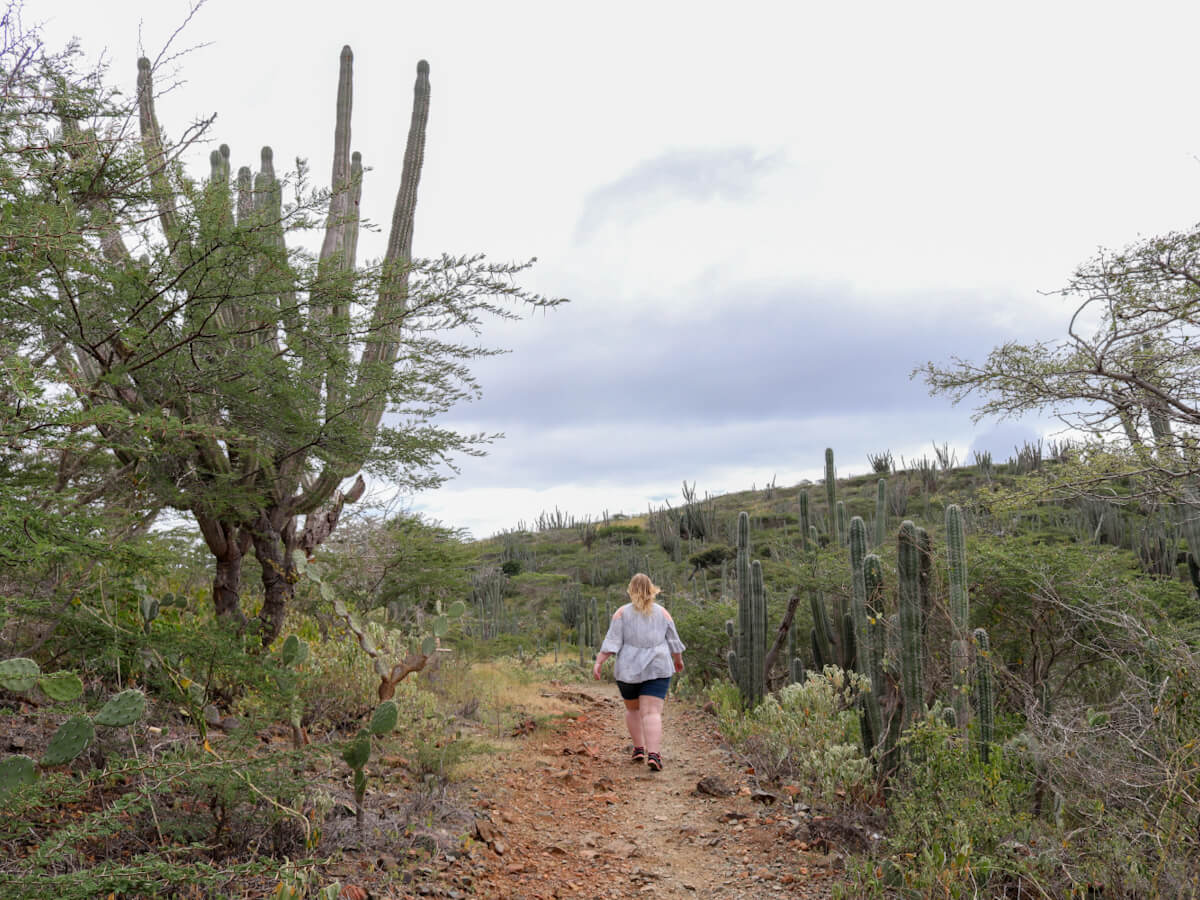
While it seems crazy to hike in the desert, hiking in Arikok National Park is one of the best ways to explore the park. I did it, and can say it’s worth it but bring plenty of water.
The most popular trails are Miralamar Trail, Cunucu, and Rooi Tambu.
Miralamar Trail is located near the Arikok National Park Visitor’s Center and leads you through lush vegetation, and up a hill to a gold mine.
Cunucu Loop Trail is a loop hike, great for all levels, which offers a great intro to the park and provides an opportunity to see wild screaming goats and lizards.
6. Miralamar Gold Mine Complex
History lovers should visit the Miralamar Gold Mine Complex.
It’s an abandoned gold mine that can be reached by a short hike.
Once at the summit, you’ll find ruins of which was once the largest gold mine in Aruba.
7. Jamanota Hill
Standing at 188 m (617 ft), Jamanota Hill is the largest hill on the island.
You can drive up in a 4×4 most of the way, but you will need to hike to the top.
You can enjoy panoramic views of the southern part of Aruba from the summit.
8. Natural Bridge
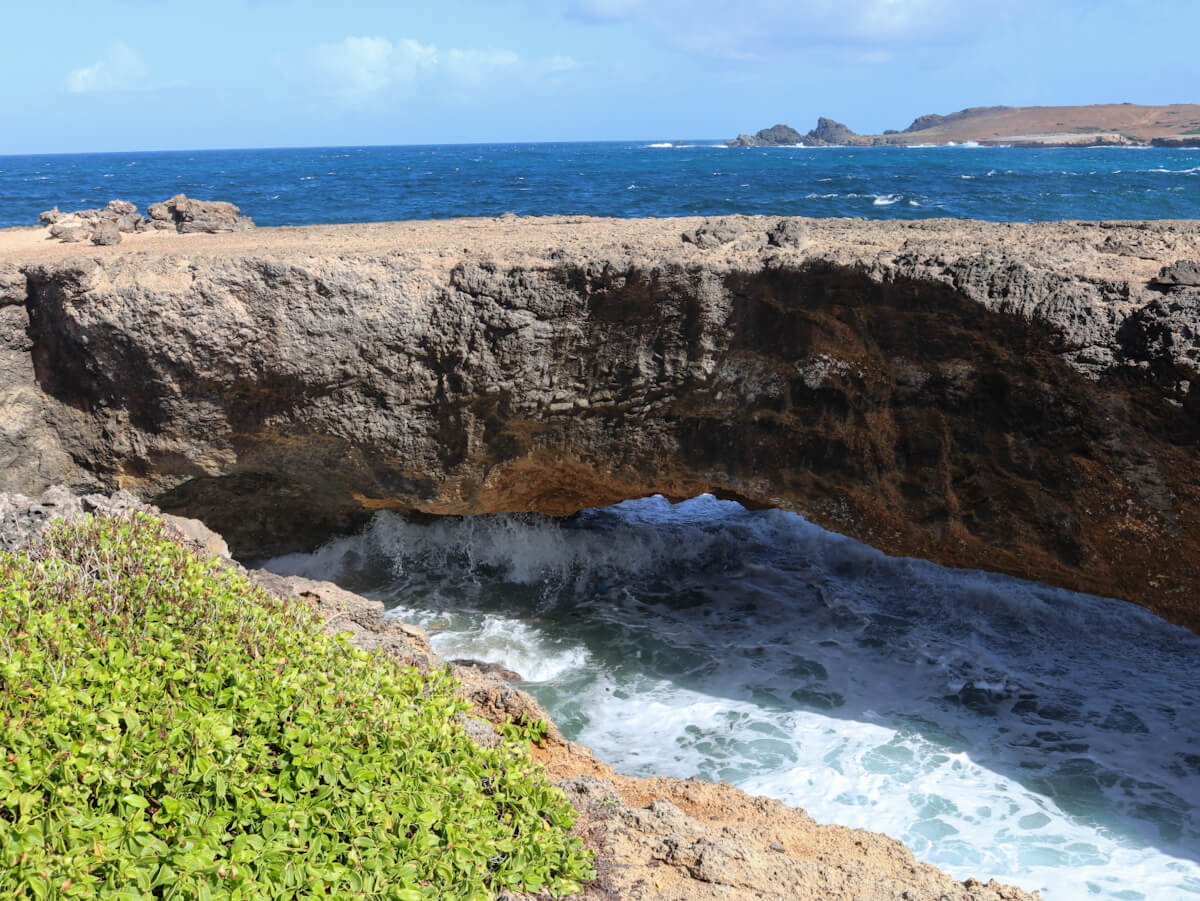
Natural Bridge is a cool geological site where a 30m (100 ft), arch created by the rough ocean waters eroding the rocks over time.
Sadly, the original bridge collapsed in 2005, but the nearby Natural Baby Bridge is equally impressive and worth visiting.
I loved watching the waves crash into the bridge.
9. Dos Playa
Dos Playa, meaning two beaches, is two side-by-side beaches that are remotely located. The most popular option to reach this beach is on a jeep tour.
One of the beaches is enjoyed by experienced surfers and the other is for sunbathing.
The waves are strong, so please be cautious if you go surfing.
Dos Playa is also the most important turtle nesting site on the island. Be cautious not to disturb any turtles or nests that you see.

How to Get to Arikok National Park
To get to Arikok National Park takes 40 minutes from the north side of the island where most hotels are.
You can rent a vehicle, book a guided tour, take a taxi, or bus nearby and walk to reach the entrance.
When choosing a rental car, a 4×4 is the best choice to get around the rough roads. If you do not plan on visiting Natural Pool, then a 4×4 isn’t required and you can visit the park with a regular rental car.
ATVs have been banned in the park since 2020 to promote sustainability and prevent further damage.
During my visit, I took the bus to the park, hiked within the park, and caught rides with other travellers and locals.
Park Hours & Cost
The park is open every day, with two entrances to choose from.
San Fuego Entrance – easiest to reach and open from 8:00 AM to 4:00 PM
Vader Piet Entrance – at the southeast side of the park and open from 8:30 AM to 3:00 PM. This is where you will see the windmills found on the park’s edge.
The Arikok National Park entrance fee starts at 11 USD for adults, and visitors 17 or younger are free. The fee goes toward further park preservation and education programs it offers.

3 Most Popular Tours of Aruba National Park
Arikok Hiking Tour in Aruba – a guided 3 hr moderately difficult hike through the park’s beautiful landscapes
Natural Pool & Baby Beach Jeep Tour – a half-day jeep tour exploring Natural Pool, Baby Beach, Fontein Cave, and more
Natural Pool, Cliff Jumping, and Aruba North Coast UTV Tour – a 6 hr tour of Aruba in a UTV exploring the Natural Pool, Natural Bridge, Gold Mines, and more
Arikok Park Rules & Regulations
- Stay on park roads
- It is illegal to drive on dunes and beaches
- Animals or plants are not allowed in the park
- Do not remove or damage any nature in the park – but do remove your litter
- Do not touch the pictographs found in caves

Helpful Tips for Visiting Arikok Park Aruba
- When visiting Arikok Park in Aruba, practice Leave No Trace principles. Anything you bring into the park, bring back out.
- Be aware of your surroundings and exercise caution, especially near cliffs
- Make sure you come prepared with plenty of water, snacks, and sunscreen. Arikok National Park may be beautiful, but it’s also very rugged.
- Choose clothes suitable for hot weather hiking. Light fabrics, lightweight and with sun protection.
Arikok National Park Map
Here is a map to help you get around the park: Map of Arikok
FAQs About Arikok
What is Aruba National Park Known For?
Aruba National Park is known for its rich history, stunning landscapes, and its protected flora and fauna.
The area features a wide variety of landscapes and ecosystems that are one-of-a-kind to the island.
Whether you prefer to explore the beach, desert, caves, or geological and historic sites, this park has it all.
Is Arikok National Park Worth Visiting?
Arikok National Park is worth visiting if you love exploring the outdoors, learning about history, or capturing some amazing photos.
Exploring the park was one of the highlights of my week in Aruba and the only opportunity I had for hiking in Aruba.
How Long Do You Need at Arikok National Park?
Plan to spend a half or full day at Arikok National Park. Attractions in the park are spread out and you will want to take your time to enjoy them. I spent a full day in Arikok.
Arikok National Park Review & Final Thoughts
Arikok National Park is a must-visit for adventure lovers. Spanning over 7900 acres, there is a lot to see and do. It was one of my favourite places to visit on the island.
Whether it’s an off-road safari in a 4×4 or a hiking tour through the desert, there is something here that will suit anyone’s needs and interests. I highly recommend tours to not get lost in the desert.
Don’t miss visiting the Natural Pool and at least one of the caves: Fontein or Quadirikiri.
And when you’ve had enough time in the desert, go for a dip at one of Aruba’s snorkelling beaches.
Happy travelling!
Travelling to the Caribbean? Read More:
- One Week Aruba Itinerary
- How to Spend One Day in Aruba
- How to Visit Arikok National Park
- Best Arikok National Park Tours for Adventure
- Unique & Non-Touristy Things to Do in Aruba
- Best Aruba Snorkelling Tours
- Best Snorkelling Beaches in Aruba
- Aruba vs Costa Rica
- Aruba vs Barbados
- 5 Days in Barbados Itinerary
- How to Spend 1 Day in Barbados
- When & Where to Swim with Turtles in Barbados
- Best Snorkelling Tours in Barbados
- Fun & Unique Things to Do in Barbados
- Lickrish Food Tour Review
- Antigua vs Barbados
- Antigua vs Aruba
- Where to Stay in Antigua
- Antigua Diving Review: Dive Carib Antigua
- Antigua Snorkelling Review: Bernie’s Snorkeling Antigua
- How to Safely Swim with Stingrays in Antigua
- Things to Know Before Driving in Antigua
- Best Antigua Snorkelling Tours
